Best Sneakers for Every Occasion in 2026: The Complete Style and Comfort Guide#
From boardrooms to black-tie dinners, the right luxury sneaker doesn’t just work — it works harder than anything else in your wardrobe.
Introduction#
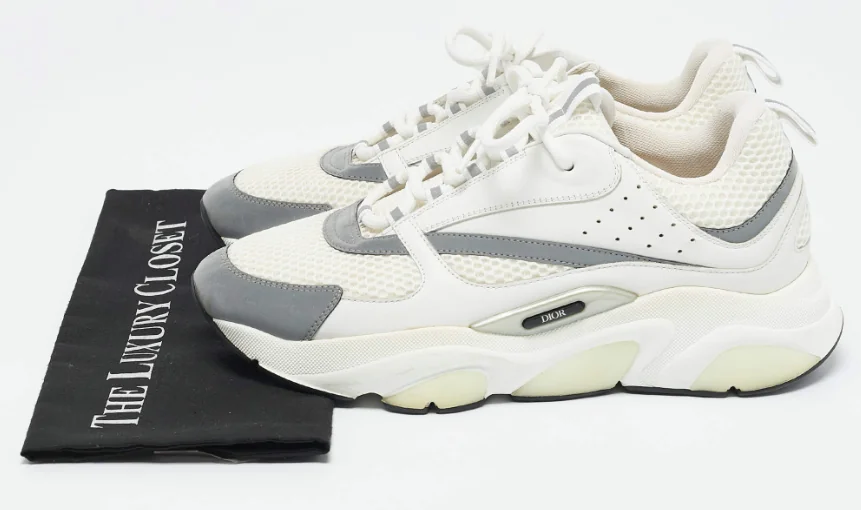
There’s a version of this article that opens with a sweeping declaration about sneakers changing fashion forever. You’ve read that piece a hundred times. This isn’t it.
What you actually need — especially if you’re spending £500 to £1,500 on a pair — is honest, specific, occasion-by-occasion guidance on which luxury sneakers are genuinely worth the investment, which ones look great on Instagram but fall apart in real life, and which silhouettes will still feel current three years from now.
The best luxury sneakers in 2026 aren’t just about brand cachet. They’re about construction quality that holds up across thousands of steps, silhouettes that translate across dress codes, and materials that age beautifully rather than spectacularly. That’s what this guide covers.
Whether you’re a seasoned collector tracking resale multiples on limited releases or simply someone who wants to justify replacing every shoe in their wardrobe with a single exceptional sneaker, the frameworks here will help you spend precisely and wisely.
Why Luxury Sneakers Deserve a Permanent Place in Your Wardrobe#
Let’s settle this argument properly: luxury sneakers aren’t a compromise. The idea that wearing them to anything formal represents a relaxing of standards gets the value proposition exactly backwards.
A well-constructed leather sneaker from Common Projects or Loro Piana will outlast three seasons of trend-driven dress shoes. The upper is typically full-grain calfskin or nubuck cut with the kind of precision reserved for bespoke footwear. The sole is bonded orstitched rather than glued under cost-saving conditions. The last — the foot-shaped form around which the shoe is built — is developed with biomechanical input rather than aesthetic compromise alone.
The health argument is also genuine, not just marketing. Podiatrists consistently note that well-designed sneakers, particularly those with padded collars, structured midsoles, and appropriate toe box width, distribute load across the foot more evenly than stilettos, narrow-toed dress shoes, or flat slides. If you’re walking significant distances in a city, travelling through airports, or standing through long events, a luxury sneaker with proper arch support is genuinely better for your knees, hips, and lumbar spine than most formal alternatives.
The versatility case is equally strong. A white leather Common Projects Achilles Low can be worn with tailored trousers, raw-hem denim, a summer suit, or weekend casuals. No brogues, no loafers, and certainly no stilettos operate across that range. The wardrobe cost-per-wear calculation on a £500 sneaker worn200 times a year is frankly more defensible than most equivalent expenditure on single-occasion footwear.
Finally, resale. Certain luxury sneaker releases — select Nike collaborations, limited Dior × Jordan drops, and rare New Balance collabs — appreciate meaningfully. Even mainstream luxury models from Common Projects and Golden Goose hold their pre-owned value at60–80% of retail in good condition, which outperforms the vast majority of fashion purchases.
The only genuine downside: not all luxury sneakers are created equal. Some trade heavily on logo recognition while delivering mediocre construction. Identifying the difference is exactly what the next section is for.
What Separates a Great Sneaker from an Expensive One#
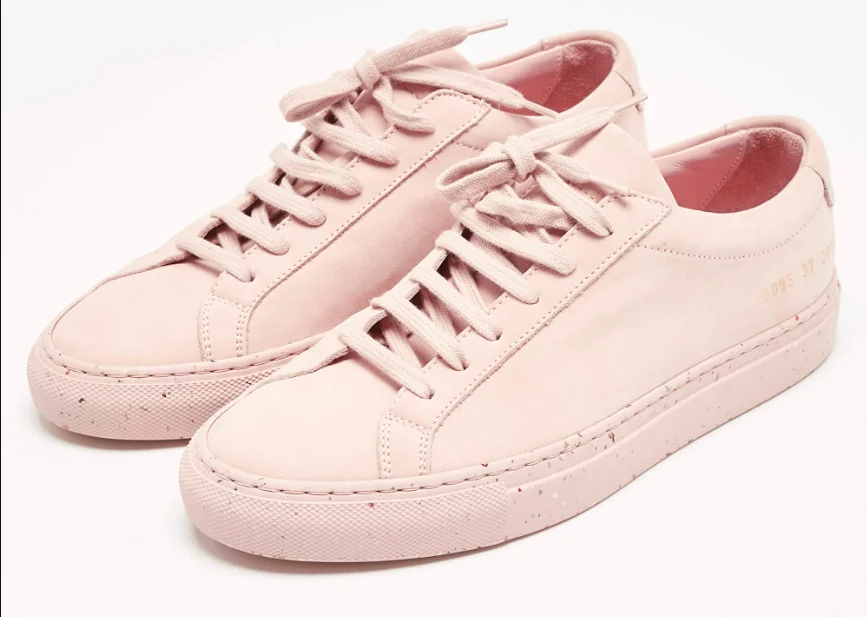
Price and quality are related in luxury sneakers, but the relationship isn’t linear. A £700 sneaker is not automatically twice as good as a £350 one. Some of the most expensive styles on the market are paying for heritage branding on a factory-standard construction. Some mid-range luxury offerings are genuinely exceptional. Knowing what to look for matters.
The sole stack. Turn the sneaker over. A luxury sole should be substantial — not padded to the point of chunky aesthetics, but engineered with clear midsole differentiation from the outsole. Vulcanised rubber outsoles wear well; translucent gum rubber ages handsomely on the right silhouette. What you don’t want is a thin, uniformly hard sole that transmits every impact directly to your heel. The Loro Piana Walk & Run sole, for instance, is a masterclass in comfort engineering without visual bulk. Balenciaga’s Triple S sole, while architecturally dramatic, is legitimately cushioned and shock-absorbent beneath the performance theatre.
Upper construction. Examine the stitching at stress points — the toe cap, collar, and side reinforcements. Luxury construction uses tighter stitch counts and reinforced thread. Check where the upper meets the sole: clean, even bonding with no excess adhesive bleed is a baseline quality indicator. On full-grain leather uppers, look for consistent grain texture — cuts from the hide’s shoulder or belly (cheaper) show more variance than cuts from the back.
The last. This is the carved form around which the shoe is built, and it determines fit and foot support more than any other element. Well-lasted sneakers provide genuine arch support and toe-box room. Common Projects’ lasts are considered industry benchmarks — narrow enough to read as elegant, wide enough at the toe not to compress. Conversely, some fashion-house sneakers are lasted primarily for aesthetic photography, sacrificing foot depth for a sleek low-profile silhouette that feels cramped after an hour.
Materials. Full-grain leather, suede, and technical mesh made in established European or Japanese mills are standard at the luxury tier. Be suspicious of any leather that feels plasticky or has an overly uniform texture — those are indicators of corrected grain or bonded leather, which crack and peel rather than developing a patina. Nubuck (buffed full-grain) ages beautifully but requires consistent care. Canvas and technical fabric uppers are acceptable if the weave is tight and the material is clearly premium — check for pilling or loose threads as early failure indicators.
Weight and flex. Pick the sneaker up. A genuinely well-constructed shoe has weight that communicates substance without feeling like a burden. Flex the sole: it should bend at the ball of the foot, not midway through the arch. A sole that resists flexing at the correct point will fight your natural gait.
What you’re actually paying for. At the luxury tier, you’re partly paying for provenance — Portuguese handcraft, Italian tanneries, small-batch production. That context is legitimate if the output reflects the process. But you’re also, at certain brands, paying primarily for a logo. The honest test: remove the brand identifiers and ask whether the shoe’s physical construction still justifies the price. For Common Projects, Maison Margiela Tabi, Veja (V-10tier), and Loro Piana, the answer is yes. For certain streetwear-adjacent luxury labels that peaked in 2019, less reliably so.
The Best Luxury Sneakers for Everyday and Weekend Wear#
Casual luxury — the sneaker you reach for on an unhurried Saturday, a travel errand run, or a long city walk — is arguably the category with the most room for error. Because the pressure to look deliberate is lower, it’s easy to default to whatever’s comfortable. The better approach is to use this category to build the foundation of your sneaker wardrobe: styles that are genuinely versatile, durable, and not so trend-dependent that they’ll embarrass you in three years.
Golden Goose Superstar The most divisive sneaker in luxury retail. The deliberately distressed, pre-scuffed aesthetic reads either as artful or absurd, depending entirely on who’s wearing it. What’s not in question is the quality: full-grain leather upper, Italian construction, and a sole with genuine durability. Worn with relaxed straight-leg denim, a cashmere sweater, and no visible effort, the Superstar works. Paired with anything that’s trying too hard, it looks confused.
Honest downside: The pre-distressed finish means you can’t resell the “new” condition story. Pre-owned prices reflect this — they hold value moderately but don’t appreciate. The aesthetic has also been imitated so heavily at lower price points that the brand distinction is partly eroded.
Common Projects Achilles Low If you own nothing else from this guide, own these. The Achilles Low is the Platonic ideal of the minimal luxury sneaker: clean Italian leather upper, gold foil serial number at the heel (the brand’s only branding), and a last that fits like it was made for a foot rather than a rendering. Available in white, black, natural white, and off-white, it works across casual and smart-casual contexts without effort.
Honest downside: The white version marks quickly and requires genuine maintenance discipline. The sole isn’t replaceable without specialist cobblers. At around £450–£500, it’s not cheap for what appears to be an extremely simple shoe — though the construction quality genuinely justifies the price.
Veja V-10 (Leather and Campo) Veja occupies an interesting position — technically not a luxury brand, but the V-10 in leather sits comfortably alongside it in quality and retail positioning. French-designed, Brazilian-made from Amazonian rubber soles and GOTS-certified organic cotton with partial chrome-free leather, it has a genuine sustainability narrative that holds up to scrutiny. The silhouette is cleaner than a Stan Smith and more casual than Common Projects.
Honest downside: The branding is visible and design-led; some buyers find it looks slightly athletic for elevated casual. The rubber sole, while technically excellent, can mark polished floors.
Maison Margiela Replica Underappreciated in the context of everyday wear. The Replica series — directly referencing vintage military and training shoe silhouettes — has a low-key quality that doesn’t announce itself. The leather is soft, the construction solid, and the off-white colourways have a convincingly organic quality that looks more interesting than plain white.
Honest downside: Less immediately legible as luxury to those outside the fashion industry. Sizing runs slightly large; order half a size down.
Office-Ready and Smart-Casual: Sneakers That Cross the Dress Code Line#
The workplace sneaker conversation has matured significantly. What was contentious five years ago is now largely settled: in most professional environments outside the most traditional law firms, finance floors, and client-facing hospitality, a clean, minimal leather sneaker reads as deliberate rather than casual. The key is understanding which sneakers carry that professional readability and which ones clearly belong on a running track regardless of price.
The operative principle: a sneaker worn to the office should read first as a shoe and second as a sneaker. Chunky silhouettes, heavy branding, and conspicuous streetwear associations undermine this. Clean leather, minimal colour, and a tapered or understated silhouette support it.
Common Projects Achilles Low (white or black) The consensus choice. Paired with slim tailored trousers and a structured shirt, the Achilles Low could be mistaken for a very clean court shoe from a distance. Up close, it’s clearly a sneaker, but an impeccably made one. This is exactly what you want: intentional, not disguised.
Axel Arigato Clean 90 A slightly lower price point than Common Projects with comparable construction quality. The Clean 90 has a marginally more casual proportion — a thicker sole and slightly rounder toe — which works well with cropped tailoring but can look slightly off with traditional full-break trousers.
Honest downside: The brand recognition is growing but still below Common Projects among fashion-literate office environments, which matters for some buyers. The wider sole read can undercut the dressiest combinations.
Cole Haan ZERØGRAND Wingtip Oxford Sneaker Mention this to a purist and you’ll provoke debate. The ZERØGRAND is a hybrid — the aesthetic of a traditional Oxford with the midsole and cushioning of a performance running shoe. It’s unambiguously office-appropriate in appearance while delivering all-day comfort that traditional dress shoes simply cannot match. The tradeoff is that it straddles two categories rather than excelling in either.
Honest downside: At the luxury tier, it reads slightly corporate rather than editorial. It won’t photograph as well as Common Projects on style-focused occasions, but for a genuinely long working day on foot, it’s one of the most practical choices available.
Loro Piana Speedster For the budget bracket above £800, the Loro Piana Speedster is exceptional in professional contexts. The combination of premium suede and leather uppers with a sophisticated silhouette and the subtlest possible branding (a minimalLL monogram on the insole) makes it genuinely appropriate for even client-facing business contexts. The construction reflects Loro Piana’s textile expertise — the materials are simply not replicable at lower price points.
Honest downside: Suede uppers require weather awareness. It’s not a shoe for an unexpected downpour.
What genuinely doesn’t work in the office: Balenciaga Triple S (too architecturally extreme for anything tailored), Golden Goose Superstar (the distressed finish undermines professional readability), Dior B23 high-top (the height creates proportion issues with most office trousers), and anything with a visible sports branding heritage regardless of designer collaboration status.
Evening and Event Styling: When Sneakers Earn Their Place at the Table#
This is the genuinely difficult category — and the one where most advice collapses into either overcautious hedging or wishful thinking. Let’s be direct: the majority of luxury sneakers do not belong at formal evening events. A black-tie gala, a wedding ceremony, or a Michelin-starred restaurant with a strict dress code are not occasions where sneakers read as confident personal style. They read as misjudged.
That said, there is a specific subset of evening and event contexts where a precisely chosen sneaker not only works but elevates: gallery openings, smart-dinner-casual restaurant settings, industry events, evening cultural occasions, and certain wedding receptions where the dress code is deliberately non-traditional.
The silhouettes that function in these contexts share specific characteristics: a low-profile that keeps the foot close to the floor, a sole that doesn’t add visible height, a minimal leather or high-quality satin upper, and no sporting or streetwear visual cues whatsoever.
[Saint Laurent](/brands/ysl-tribute-sandals-guide/) SL/61 The benchmark for evening-appropriate luxury sneakers. A clean, extremely low-profile leather trainer with a refined last and a sole so minimal it’s barely visible. In black patent or smooth calfskin, worn with tailored tuxedo trousers or a sleek midi dress, this is the sneaker that most convincingly earns its place at the table. The brand’s Parisian aesthetic removes any sportswear association entirely.
Prada Monolith (Low, Leather) The Monolith’s defining visual element — the lug sole — is substantial enough to read as sculptural rather than sporty. In black brushed leather, it works with evening dressing in a way that’s more architectural than casual. Pair with wide-leg evening trousers or a fluid long skirt to use the sole’s visual weight intentionally.
Honest downside: The lug sole is divisive. If your evening aesthetic leans toward understated elegance rather than fashion-forward edge, it may read as too aggressive.
Maison Margiela Tabi Sneaker Controversial, but intentionally so. The split-toe Tabi profile is so distinctly non-sportswear that it reads as avant-garde footwear rather than casual compromise. In black nappa leather, worn with a tailored suit or an architectural evening dress, it’s a statement that communicates extreme fashion literacy rather than indifference to formality.
Honest downside: This is a full commitment to a specific aesthetic. It requires confidence and a wardrobe that supports it. If you’re uncertain, it’s wrong for you.
What to avoid for evening: Chunky trainers in any colourway (the sole height creates proportional awkwardness with formal dressing), anything with visible athletic branding, white leather sneakers (they inevitably read as casual regardless of construction quality), and high-tops with formal tailoring (the ankle coverage fights with trouser break logic).
Travel, Active Days, and Everything In Between#
The travel category is where luxury sneakers face their most demanding brief: genuine performance across irregular terrain, prolonged wear, varying weather, and packing constraints — all while maintaining the aesthetic standard you’d expect from an investment piece.
This is also the category where the performance-luxury divide is most usefully crossed. Several sport-adjacent luxury brands have developed sneakers with legitimate technical credentials that match their aesthetic ambitions.
On Running × Loewe Cloudtilt The collaboration between Swiss performance brand On and Spanish luxury house Loewe produces something genuinely without compromise: On’s CloudTec sole technology — which delivers real cushioning and energy return over distance — housed in an upper that reflects Loewe’s material and craft expertise. The result is a sneaker that is comfortable across20,000 steps and looks coherent with elevated casual or smart-casual dressing.
Honest downside: The collab premium is substantial. If the Loewe branding isn’t important to you, On’s standalone product at a third of the price delivers the same technical performance.
New Balance 327 (High-End Collaborations) New Balance’s collaborative programme with brands including Aime Leon Dore, Joe Freshgoods, and Salehe Bembury has produced some of the most sophisticated athletic-luxury fusions available. The underlying327 silhouette — a wide, retro running profile with exceptional cushioning — handles genuine active days with ease. The collaboration editions add material and design elevation.
Honest downside: Resale dynamics on these vary enormously by release. Some appreciate significantly; others don’t. Research specific collab drops before treating them as investment purchases.
Hoka Clifton (Luxury Collab Editions) Hoka’s maximalist cushioning technology, in collaboration with luxury editorial favourites including Bodega and Engineered Garments, has moved into spaces where maximum comfort over distance is the non-negotiable brief. For travel days involving extensive walking, the Clifton delivers comfort over distance that no fashion-first sneaker matches.
Honest downside: The visual profile is unmistakably athletic. If you’re packing for a trip that mixes city exploration with business dinners, a second pair for evening occasions is genuinely necessary.
Brunello Cucinelli Sneakers (Wool and Suede) For travel in more refined contexts — business trips, private holidays, luxury resort settings — Brunello Cucinelli’s sneaker range offers a quieter kind of performance luxury. The materials (cashmere-blend uppers, suede toe caps, hand-finished details) are extraordinary, and the profile is sophisticated enough for any setting. These are not shoes for high-mileage urban days, but for elegant travel, they are unmatched.
Honest downside: At £800–£1,200+, these are the most expensive proposition in this guide on a per-use basis unless you’re genuinely in the target contexts regularly.
Packing and care for travel: Pack sneakers in dust bags (most come with them; use them). For leather uppers, a thin application of leather conditioner before a trip provides surface protection. Alternate pairs on multi-day trips — leather needs24hours minimum to breathe and recover its shape between long wear sessions. A cedar shoe tree in your luggage is worth the weight.
Buying Advice: Investment Value, Resale, and What to Avoid#
Resale Value by Brand#
Not all luxury sneakers hold their value, and the ones that do are more specific than the category-level conversations suggest.
Strong resale performance:
- Common Projects Achilles Low — holds65–75% of retail in very good condition; clean white pairs in original box command stronger prices
- Nike × Dior Air Jordan 1 — limited production means multiples on resale; authenticate carefully due to high counterfeit volume
- New Balance × Aime Leon Dore (select colourways) — consistent demand keeps prices close to retail; limited editions appreciate
- Balenciaga Triple S (original2017–2019releases) — the originals hold value better than later reissues
Moderate resale performance:
- Golden Goose Superstar — holds 55–65% in good condition; the distressed finish limits premium positioning
- Axel Arigato Clean 90 — solid but not remarkable; expect 50–60%
Weak resale performance:
- Fast-fashion luxury collaborations (limited shelf life once trend passes)
- Logo-heavy styles from houses without strong sneaker heritage
- Any silhouette that peaked in a specific trend cycle without a lasting design vocabulary
Authentication Red Flags#
Counterfeits are sophisticated and increasingly convincing. When buying pre-owned, prioritise these checks:
Common Projects: The gold foil serial number at the heel should be sharp, not blurry or misaligned. The six-digit code format follows a specific structure (style code / colour / size); mismatched numbers indicate a fake. The leather should be buttery and consistent in grain.
Dior × Jordan collaborations: Verify the heat stamp on the Dior Oblique lining — counterfeits often get the oblique pattern angle wrong. The box certification card should have a specific Dior reference number cross-matching the pair. When in doubt, use a specialist authentication service such as Legit Check by Ch or GOAT’s authentication programme.
Golden Goose: The star logo placement is precise on authentic pairs. The distressing pattern should look organic, not mechanically uniform. The Italian “Made in” labelling should be clean and correctly formatted.
General red flags across all brands: Misaligned stitching at the toe cap, uneven sole bonding, adhesive residue at the upper-sole join, box labelling that doesn’t match the shoe’s size or colour codes, missing or replacement insoles.
Sizing Considerations#
- Common Projects: runs true to European sizing; order your standard size
- Golden Goose: runs half a size large; size down
- Balenciaga Triple S: runs large; typically size down one full size
- Maison Margiela Replica: true to size but narrow; wide-foot buyers should consider sizing up
- On × Loewe Cloudtilt: true to size
What to Avoid#
Trend-chasing: Any sneaker that reads as a fashion moment rather than a design landmark will cost you significantly on resale when the moment passes. The Balenciaga Speed Trainer is an example — extraordinary at its peak, much less interesting in the pre-owned market as the trend cycle moved on.
Buying for investment without wearing: Unworn sneakers in original box do command better resale prices, but most buyers in this guide’s target audience are purchasing for wear. A lightly worn pair in excellent condition is a better strategy than an unworn pair in a box you’ve forgotten about.
Ignoring condition maintenance: A well-maintained pair of Common Projects Achilles at three years retains significantly more value than a poorly maintained pair at one year. Leather conditioning, proper storage, and prompt treatment of marks makes a material difference to long-term value.
Care and Longevity: How to Protect Your Investment#
Leather uppers: Apply a leather conditioner (Saphir Renovateur is the industry standard) every 8–10 wears. It prevents cracking and feeds the leather’s natural oils. For white leather, a colour-matched leather cleaner removes marks without stripping the finish.
Suede and nubuck: Treat with a suede protector spray before first wear. Use a suede brush (brass bristles for heavier marks, softer for general maintenance) rather than water and cloth. Water stains are among the hardest marks to remove from suede without specialist intervention.
Sole maintenance: Mild soap solution and a soft brush keep rubber soles clean. Yellowing on white rubber soles responds to a UV-activated whitening solution applied and left in direct sunlight — more effective than most chemical approaches.
Storage: Always store in dust bags, ideally with cedar shoe trees. Never stack sneakers — the pressure deforms the collar over time. Avoid storing in direct sunlight or high humidity; leather fades and cracks in both conditions.
Frequently Asked Questions#
Do luxury sneakers hold resale value?
Some do, consistently. Common Projects Achilles, select New Balance collaborations, and limited Nike partnership releases from brands like Dior and Off-White hold value reliably. The general luxury sneaker category — Golden Goose, Axel Arigato, mid-tier designer trainers — holds moderate value at 55–70% of retail in good condition. Trend-driven releases and logo-heavy styles from houses without strong sneaker heritage can drop to 40% or below. The investment case is real but specific; it’s not a property of luxury sneakers as a category.
How do I authenticate designer sneakers?
Start with the seller and the platform. Established authentication platforms (GOAT, StockX for sports-luxury, Vestiaire Collective with its authentication service, The RealReal) have professional checkers and formal policies. For peer-to-peer purchases, the most reliable indicators are: original receipt, original dust bag and box, consistency of serial or style codes across all three, physical inspection of stitching quality and material consistency, and — for high-value pieces — professional third-party authentication through Legit Check By Ch or CheckCheck.
Are luxury sneakers worth the price?
For the right buyer, genuinely yes — with qualifications. If you will wear the shoe regularly, the cost-per-wear arithmetic on a durable leather sneaker you wear 200 times is more defensible than most fashion purchases at any price point. If you’re also selecting a style with strong resale history and maintaining it properly, the net cost of ownership is lower than it appears. Where the case weakens: if you’re buying primarily for brand recognition, if you’re selecting a trend-driven silhouette, or if you won’t commit to basic care and maintenance. The price is only justified by the longevity the construction is capable of delivering — and longevity requires participation from the owner.
Which luxury sneaker brand has the best construction quality?
Common Projects and Loro Piana are the consistent benchmarks at their respective price tiers. Common Projects delivers exceptional Italian construction at a relatively accessible luxury price point. Loro Piana applies its textile and material expertise to sneakers in a way that justifies a higher price through genuinely superior materials. Maison Margiela’s Replica and Tabi lines are strong in construction and design originality. Balenciaga’s construction quality has been inconsistent across seasons — the Triple S originals were excellent; later releases less uniformly so.
What’s the best luxury sneaker for someone buying their first pair?
The Common Projects Achilles Low in white. It’s the clearest possible illustration of what the luxury tier delivers over premium mass-market alternatives: the leather quality, the construction precision, the last, and the longevity. It also has the broadest styling range of any shoe in this guide. Buy it, maintain it properly, and it will reset your expectations for what a sneaker can be.
Related Articles#
- Designer Handbag Trends 2025: What’s Actually Worth Buying
- Best It Bags to Buy This Year: A Definitive Guide
- 50 Best Bags Under $500: Smart Style on a Budget
Related guides
- Online Bag Authentication: What Photos Can and Cannot Prove
- Fake Goyard Bag Guide: How to Spot Real vs Fake (2026)
- How to Spot a Fake Chanel Flap Bag: Authentication Guide
- How to Spot a Fake Hermès Birkin: Expert Checklist
- How to Buy an Authentic Luxury Bag from China Safely
- New vs Pre-Owned Luxury Bags: Which Route Is Right for You?
- Chanel Bag Guide: What to Know Before You Buy
- Luxury Bag Houses


Keyword index